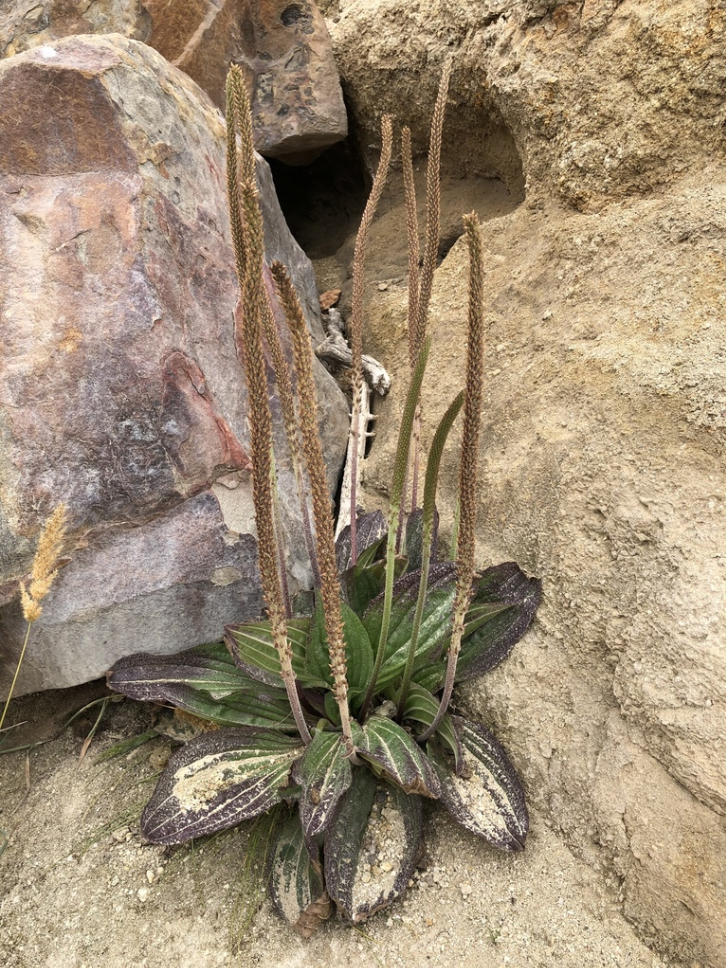


Plantain, Tall Coastal (Plantago subnuda)
List Price:
Couldn't load pickup availability
Found in salt-influenced wetlands, marshes, and damp coastal meadows, Plantago subnuda is characterized by its long, lance-shaped leaves and tall flower spikes. These narrow, upright spikes, dotted with small, pale flowers, give the plant a gentle statuesque influence in its native habitats. Its preference for transitional environments, where freshwater mingles with the sea, makes it an integral part of coastal ecosystems and a supportive species for local pollinators.
In traditional herbal practices, Plantain has been used for its soothing and restorative qualities, often to support the body’s natural response to irritation. The leaves have been used in poultices and infusions, believed to help with skin comfort and to promote general wellness. Although P. subnuda does not have extensive folklore of its own, it carries the symbolic heritage of the greater Plantago genus, which has a long history of cultural meaning in Europe and beyond. Plantain plants were known as “waybread” in Old English, a name reflecting their tendency to appear along paths and roadsides. This gave rise to the belief that they guarded travelers and offered protection during journeys. In old charms, plantain was celebrated as a steadfast survivor, trampled by riders and wagons, yet rising again, becoming a symbol of endurance, resilience, and grounded strength.
These older ideas weave naturally into the character of tall coastal plantain, which thrives at the meeting place of land and tide. Its ecological niche links it to the themes of thresholds and safe passage found in plantain lore: it grows where boundaries are blurred, standing as a quiet sentinel of edges and transitions. In this sense, P. subnuda can be seen as a coastal counterpart to the roadside plantains of folklore, an herb that watches over shorelines where journeys begin and end.