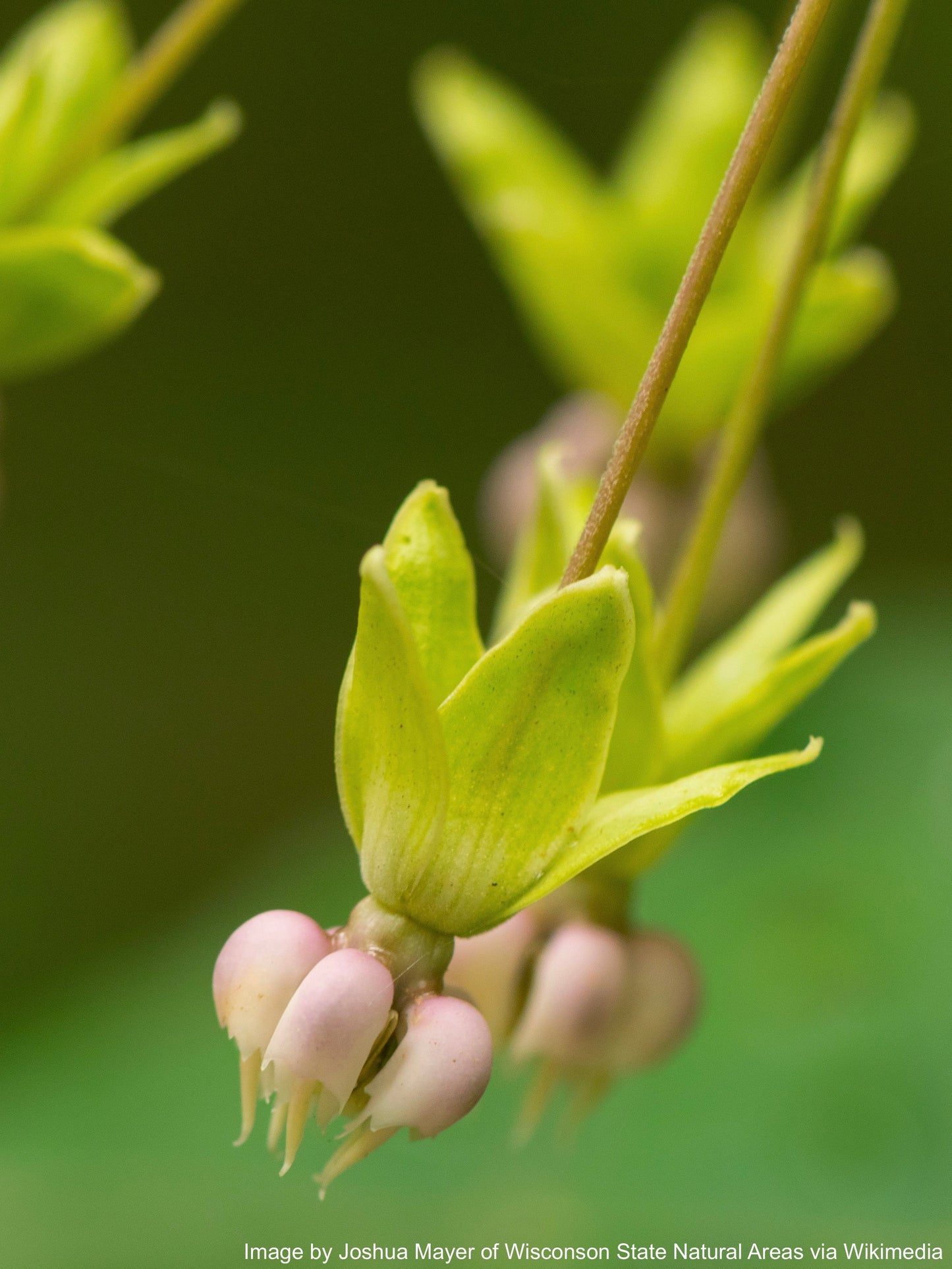


Milkweed, Poke (Asclepias exaltata)
List Price:
Couldn't load pickup availability
Resting atop lush, broad leaves, this woodland-adapted perennial offers an understated beauty of flower umbels that bear a resemblance to a falling fireworks display. Asclepias Exaltata, whose genus derives from the Greek god of Medicine, is valued for its adaptability and thrives in dappled sunlight and rich, moist soils, making it a perfect choice for naturalistic plantings and shaded gardens. Its tall stems and soft pale flowers provide texture and vertical interest without overpowering surrounding flora.
Poke Milkweed is a subtle, yet profound testament to the contributions of native plants in both cultivated and wild spaces. Its foliage provides food for caterpillars, while the copious nectar sustains an array of pollinators, especially critical to the monarch butterfly which relies on milkweeds as larval host plants. The plant’s sap, characteristic of milkweeds, contains cardenolides, natural compounds that help protect monarchs and other specialized herbivores from predation. Though potent and slightly toxic if ingested by humans or livestock, this chemical arsenal makes the plant a cornerstone of woodland wildlife habitat.