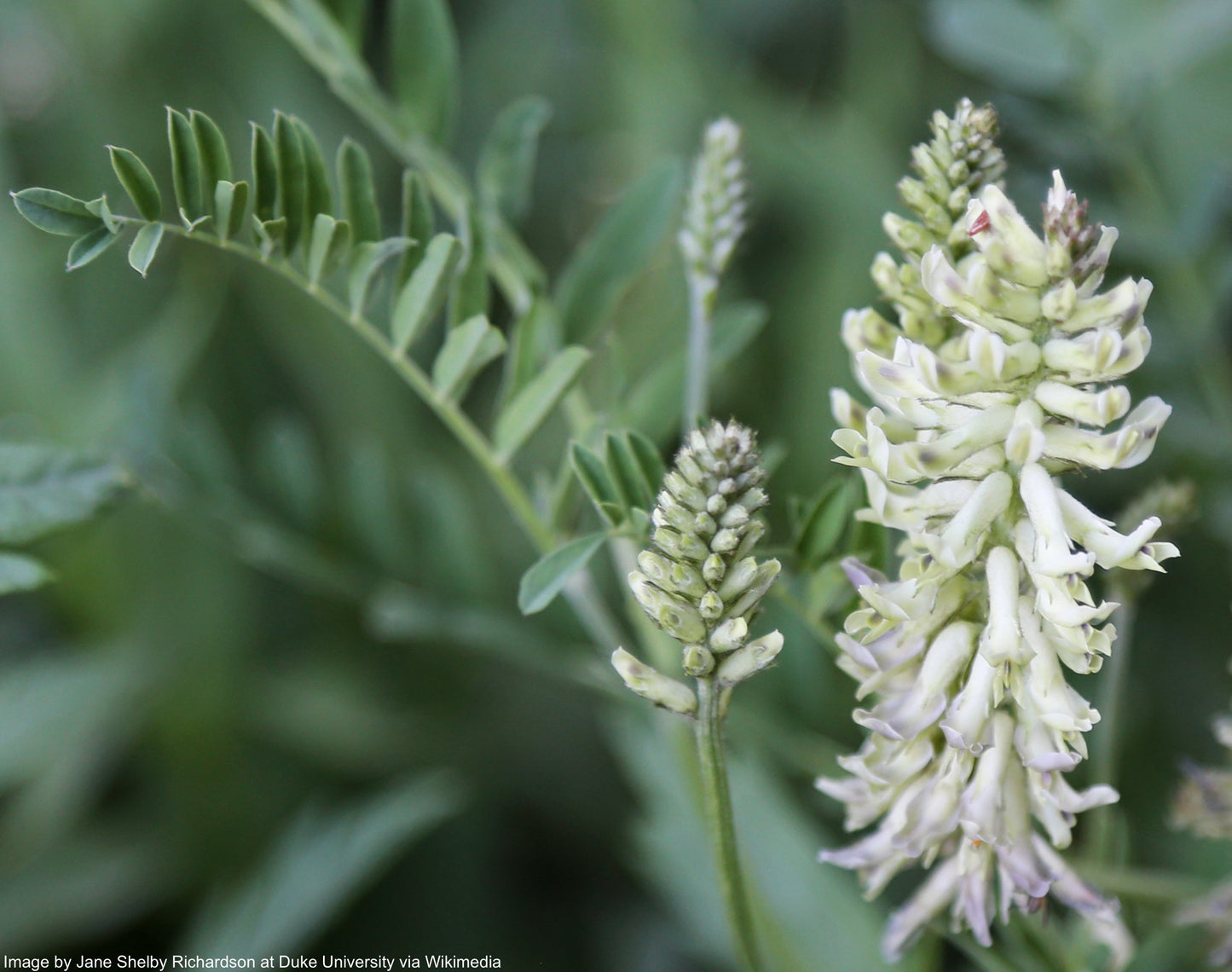


Licorice, Wild (Glycyrrhiza lepidota)
List Price:
Couldn't load pickup availability
While not identical to the cultivated European variety, this “wild” licorice contains related aromatic compounds that give its roots a warm, subtly sweet character. Forming graceful stands of feathered leaves and pale, creamy flowers, Wild Licorice is a hardy perennial native to the prairies and foothills of North America. As a nitrogen-fixing plant, it enriches the surrounding soil and supports pollinators, particularly native bees drawn to its modest but nectar-rich blooms. These flowers, perched atop fine, sticky stems, turn dark brown in the fall and persist through winter, adding seasonal interest to the garden.
Traditionally, the roots and leaves of this plant were used in various ways as part of everyday herbal practices. Dried roots and leaves were brewed into teas for digestive comfort, the root was sometimes chewed for oral care, and steeped preparations were used in washes and other customary remedies. Today, Wild Licorice continues to be valued for its historical uses, aromatic roots, and enduring place in North American botanical heritage.