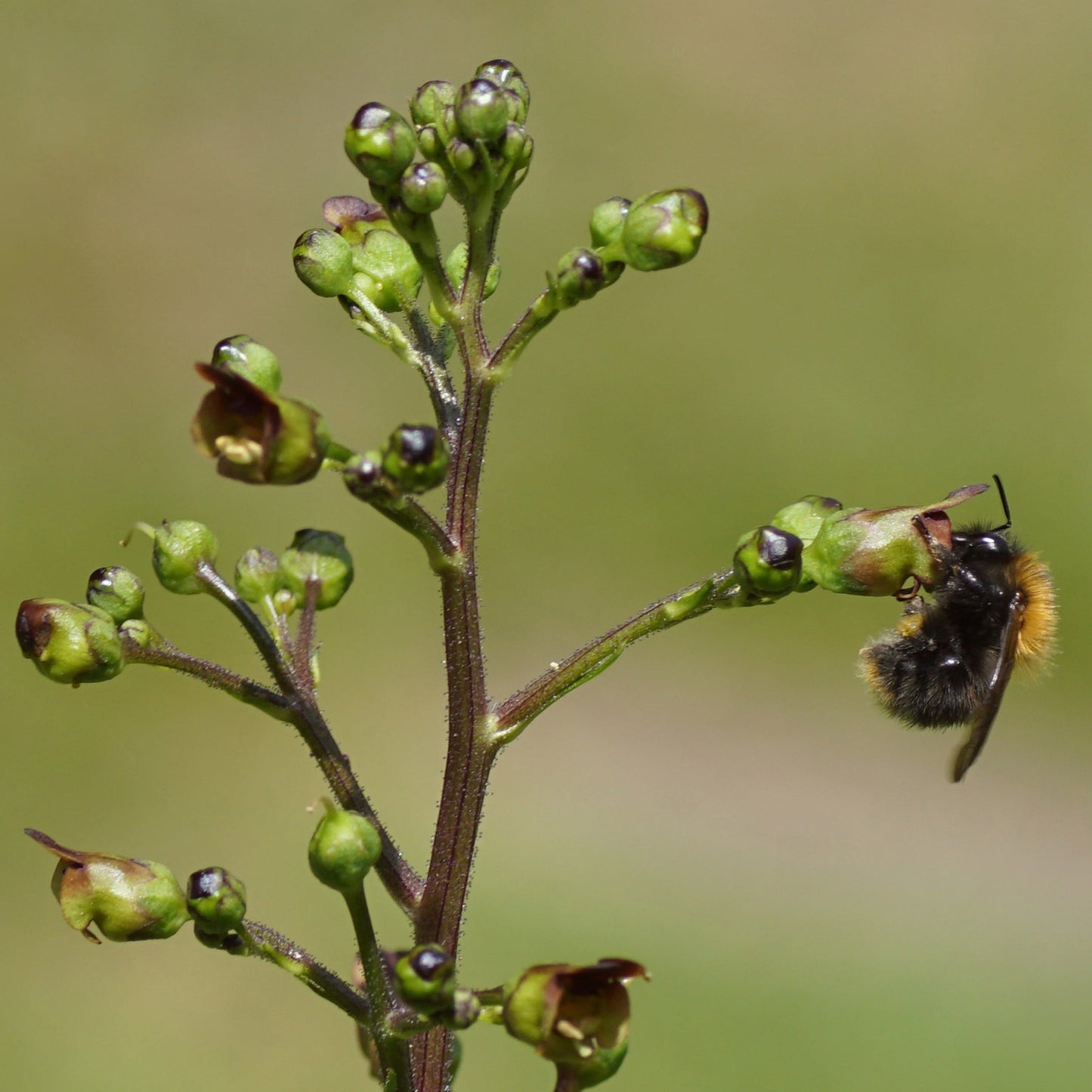


Figwort (Scrophularia nodosa)
Members save: $0.25 (5.9%)
List Price:
Couldn't load pickup availability
Figwort is as distinctive as it is underappreciated in the garden. Its name is rooted in ancient folk medicine, where the plant's roots were used to treat “fig warts,” a term for benign growths resembling the shape of a fig. This plant has a rich history in herbal medicine, especially in folk traditions. It’s best known for its topical uses applied to support skin health, including minor burns, abscesses, and sores, and historically was used for its purifying properties, particularly for conditions involving lymphatic congestion.
Figwort is adaptable to a variety of soil types, from clay to loam, and can thrive in diverse conditions. With its rugged, tall stems and clusters of greenish-brown flowers, Figwort isn't the flashiest plant in the landscape, but it certainly has a character all its own.
Growing up to 3 to 4 feet tall, Figwort thrives in moist, shaded environments, such as woodlands and stream banks. Its coarse, lance-shaped leaves are rough to the touch, adding texture to the plant's robust appearance. Though not a garden showstopper, it's a powerhouse in supporting biodiversity. Its unique, somewhat unpleasant smell might not win any fans, but it plays a role in attracting beneficial wasps and provides essential nectar to other pollinators, including bumblebees and hummingbirds, making it a valuable addition to any wildlife-friendly garden.
*Scrophularia nodosa can be toxic if ingested, causing nausea, vomiting, and dizziness in humans, and discomfort in pets like dogs and cats.