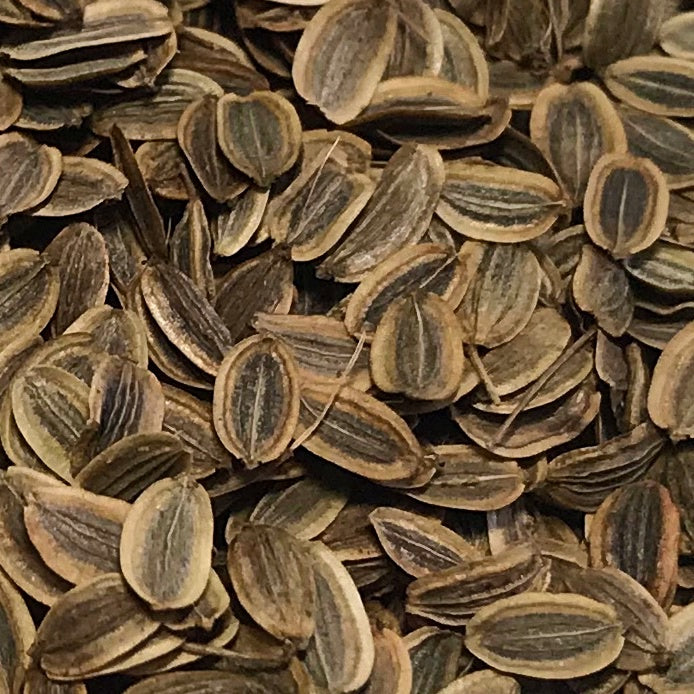


Dill, Mammoth (Anethum graveolens)
List Price:
Couldn't load pickup availability
Dill is an ancient culinary and medicinal plant in the Apiaceae family that has been celebrated and grown for many thousands of years. Records of its use as a digestive aid and tonic have even been found in the tombs of ancient Egypt. Once Called “aneth,” Dill was also said to strengthen gladiators in the days of the Roman Empire. During the Middle Ages, Dill was believed to possess magical powers that could destroy evil spells and protect the wearer if warn as a charm.
Today we know that Dill is a particularly powerful yet gentle medicinal ally that is anti-inflammatory, antibacterial, slightly analgesic, antispasmodic, antimicrobial, antiviral as well as an excellent carminative. A popular culinary herb, foodies love dillweed and seed for Its varied culinary and digestive gifts and add this herb to many dishes in particular ferments like pickles.
In the garden, Dill is a champion plant with beautiful feathery foliage that attracts many beneficial insects. These insects include honeybees, hoverflies, Ichneumonid wasps and other wasps. Swallowtail butterfly caterpillars also particularly enjoy Dill. Dill plants are said to be an effective natural insect repellent against aphids, cabbage looper, spider mites as well as squash bugs and is also said to be a great companion plant for asparagus, Brassicas, corn, cucumber, lettuce and onions.