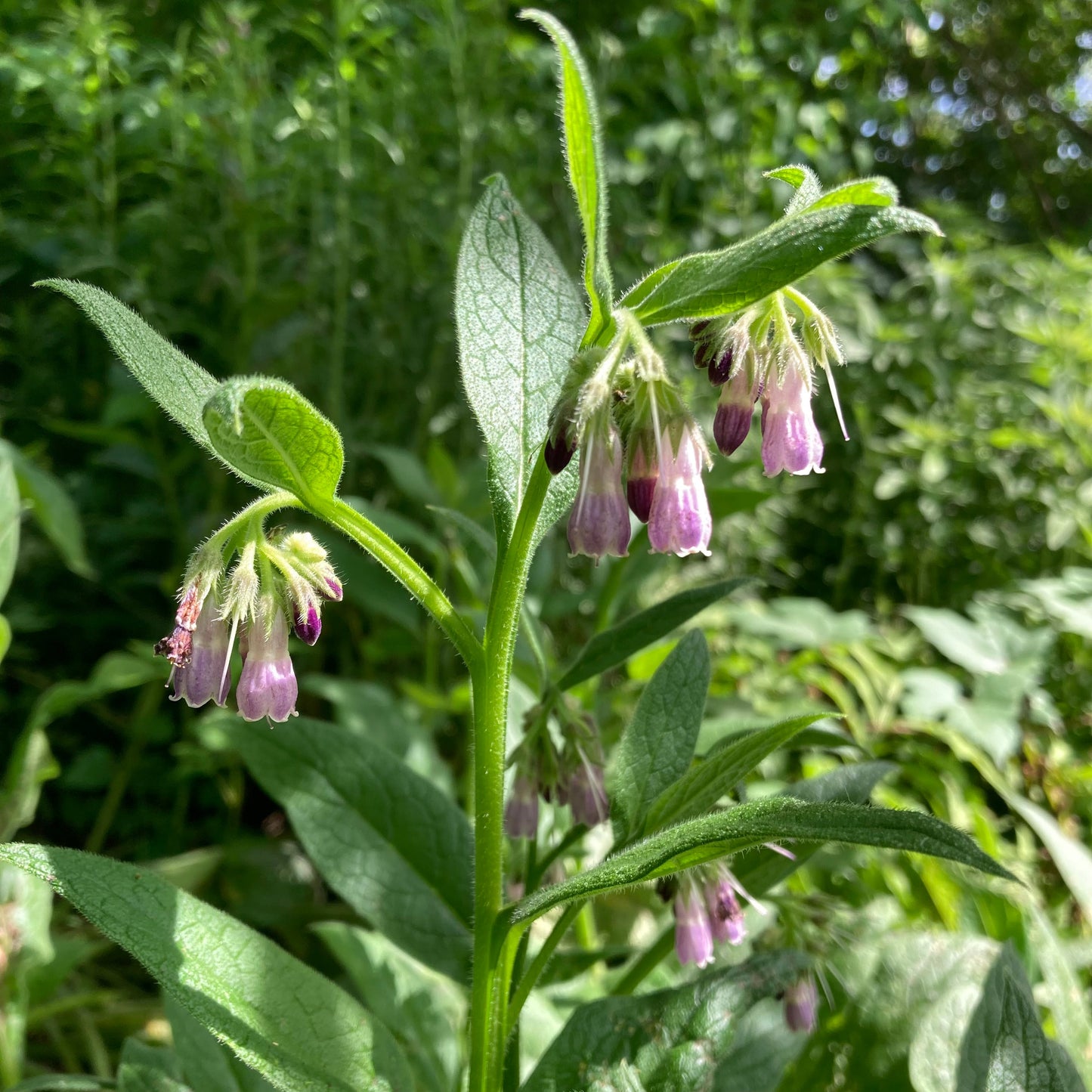


Comfrey, True (Symphytum officinale var. patens)
List Price:
Couldn't load pickup availability
*Designated an invasive species in the following states, no sale: AK, OR
True Comfrey, known for its broad, coarse leaves and clusters of pinkish-purple, bell-shaped flowers, is a perennial powerhouse valued in herbal traditions for centuries. Comfrey’s leaves and roots, when dried or steeped, were often employed in poultices or compresses in folk tradition, where its rich content of compounds was appreciated for promoting skin health and soothing discomfort.
One of Comfrey's most distinctive features is its deep taproot, which allows the plant to draw nutrients from deep within the soil, enriching the surrounding earth. As a dynamic accumulator, Comfrey is often used in gardens for soil improvement, composting, and mulching, where its ability to break down organic material contributes to the fertility of the garden.
Though Comfrey has a deep historical connection to both healing and cultivation, today it remains a favorite for its versatility in the garden. Its ability to improve soil conditions and its ornamental beauty make it a useful addition to permaculture systems and herb gardens alike, and it proves to be as reliable as it is beautiful.